Legacy MVC applications, whether they’re nestled in Java or .NET, have been the backbone of many organizations. Hosted on WebLogic, WebSphere, or other similar containers, these systems have stood the test of time. But as the digital landscape evolves, the question arises: “How do we modernise these stalwarts without losing their essence?”

Drawing from our previous conversation on modular architecture, let’s delve into transforming legacy MVC applications into dynamic, cloud-powered modules.
The Current State of Legacy MVC Applications:
Many organizations find comfort in the familiar terrains of their existing MVC applications. But, as with all things tech, there’s an inevitable itch to modernize
Before we chart the path forward, let’s understand the common starting points, there is a lot standard software but also a fair amount of ageing legacy custom code mostly as model-view-controller (MVC) applications (apps)
Hosting on Containers:
The likes of WebLogic and WebSphere have been dependable allies, hosting standard MVC code, be it Java or .NET. This is the legacy we are modernising
Common Approaches to Modernization:
When the modernsation bug bites, the first instincts often hover around the cloud. And rightly so, given its vast potential. But how do we make the leap?
1. Lift and Shift: The idea here is simple. Take the application as it is and move it to the cloud. It’s like relocating to a new home without changing the furniture. While this does offer the benefits of cloud infrastructure, the core essence remains unchanged.
2. Re-hosting in a New Cloud Container: A step ahead of the former, this method involves moving the application to a new cloud container. It’s akin to getting new furniture for the new home. However, while the surroundings change, the core logic stays embedded, keeping the application essentially closed off.
The Modular Service-Based Approach:
Given our experiences and the insights from our previous modular architecture discussions, we advocate for a more profound transformation. Instead of mere relocations, why not refactor?
By refactoring these applications into new services, decoupled from their user interfaces, a world of possibilities opens up. Not only do they cater to internal dynamics, but they also become invaluable assets for external consumers, partners, and customers.
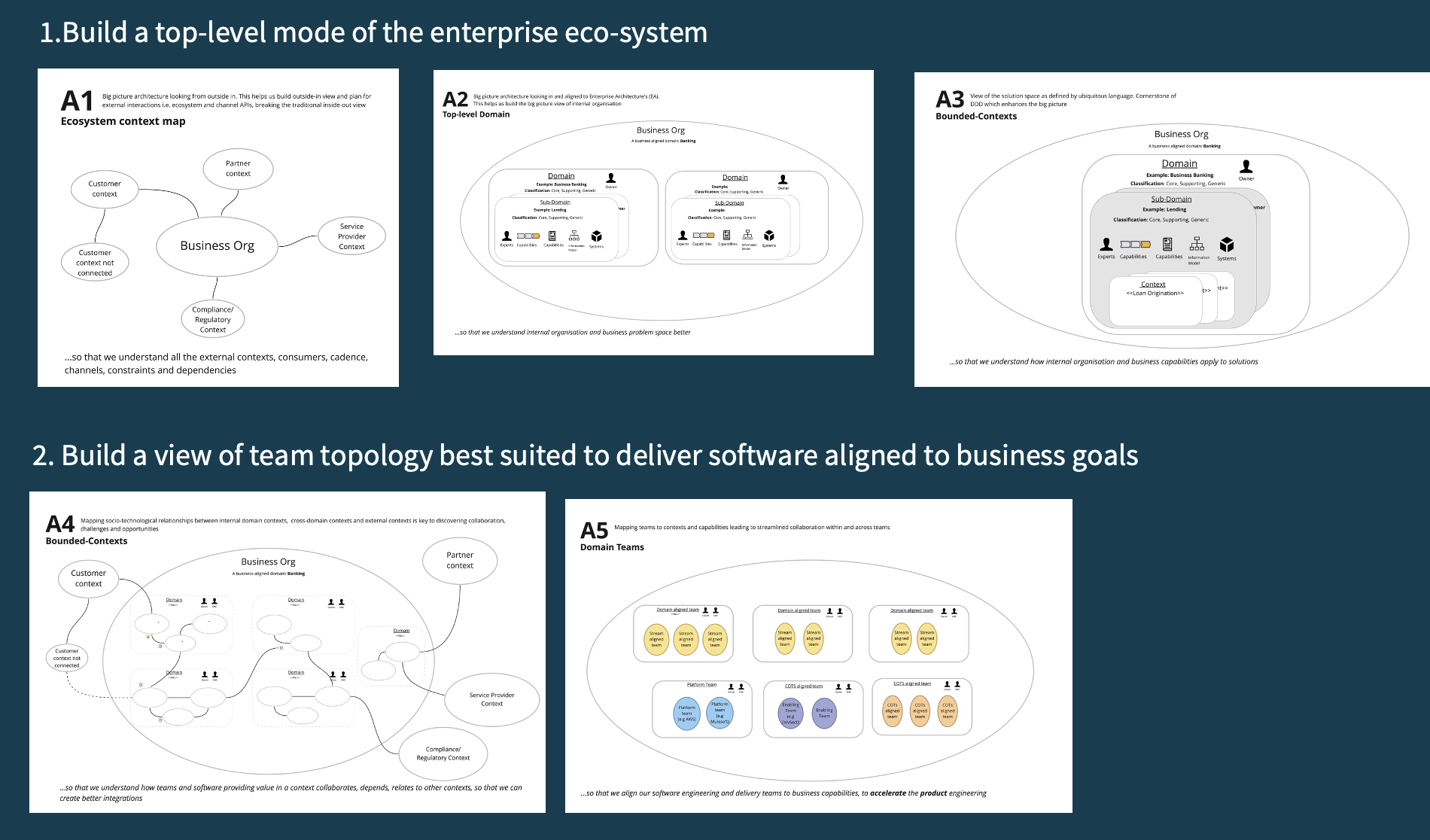
Using Domain-Driven Design (DDD) as our guiding star, we can dissect these applications, understanding their core domains, and subsequently, mould them into modern service-based modules. This approach doesn’t just modernise; it revolutionises, fully harnessing the cloud’s capabilities.
This approach has 2 parts – 1. “strategic DDD” where we look at the broad organisational domains from the business processes and iteratively build a view of business capabilities and 2. the “tactical DDD” part where we define the details of the APIs and aggregates (model) for each domain
We the map the business logic and services in the Model and Controller of our MVC application to one of capabilities and begin our refactoring

4. The ROI Argument:
Modernisation isn’t just a technical decision; it’s a business one. The initial investment in refactoring might seem daunting compared to a simple lift and shift. However, the long-term dividends are substantial:
- Scalability: Modular services are inherently scalable, adjusting to varying loads with ease.
- Maintainability: Modular architectures, especially those crafted with DDD, are easier to maintain and update.
- Extensibility: Decoupled services can be seamlessly integrated with new systems, platforms, or third-party applications.
- Cost Savings: In the long run, modular services, with their reduced maintenance overhead and efficient resource utilization, can lead to significant operational cost savings.
Conclusion:
Modernising legacy MVC applications is more than just a technical upgrade; it’s about future-proofing your digital assets. By adopting a modular, DDD-driven approach, we’re not just changing the software; we’re transforming the very way we think about, design, and interact with our systems. As you embark on this journey, remember: it’s not just about where you’re going, but how you choose to get there.
This post emphasizes the transformative potential of the modular service-based approach, especially when guided by Domain-Driven Design, in the context of modernizing legacy MVC applications.

 Alok Mishra